Two children reach for the same toy. Neither wants to stop playing, but neither is ready to let go. It is a familiar moment—and an opportunity to help siblings practice playing together.
Cooperative play is a skill children build over time, not a switch you can turn on. Small, repeatable routines can give them chances to share ideas, negotiate roles, and enjoy a common goal. Our practical parenting eBook, Nurturing Cooperative Play Among Siblings, is a resource for families looking for ways to encourage those moments.
What Cooperative Play Looks Like at Home
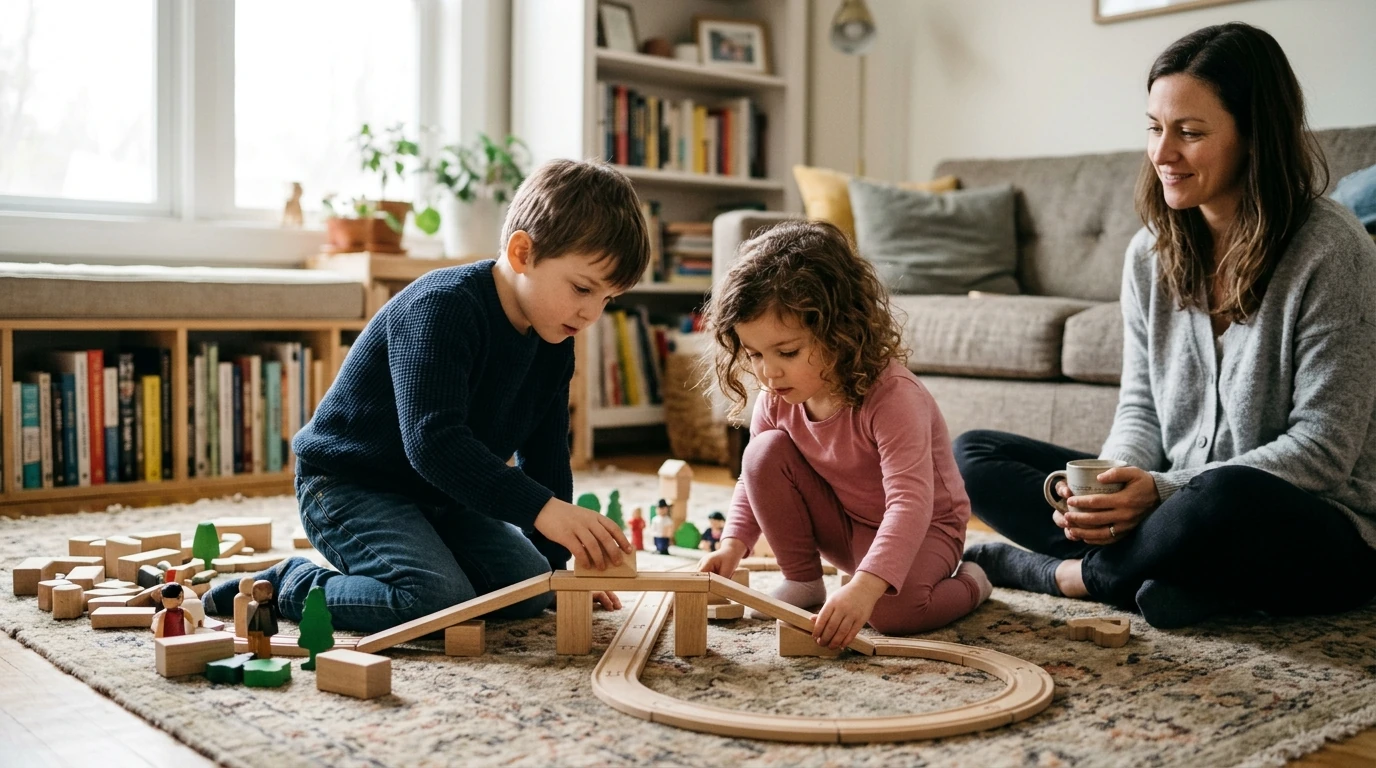
Cooperation means working toward a shared activity while making room for each child to contribute. One sibling might stack blocks while another creates a road, or both might add characters to a pretend story. Their contributions do not have to look the same to matter.
Taking turns and resolving disagreements take practice. Younger children may need you close by to help with words and transitions, while older children may be ready to suggest solutions themselves. Even then, adult support can be useful when feelings run high.
A successful session does not have to last an hour or stay perfectly peaceful. A few positive minutes spent building something together can be a worthwhile start. The American Academy of Pediatrics discusses the importance of play in children’s development and relationships.
Set Up a Shared Play Invitation
Start with a simple goal that gives both children a reason to participate. You might invite them to build a pretend town, draw a park, or open a toy restaurant. Keep the invitation open-ended: the goal is to create something together, not to follow your exact plan.
Choose a comfortable space with enough materials to reduce unnecessary competition. Separate crayons, several blocks, or a few pretend dishes can help. You can also let each child set aside a treasured possession they do not want to share. Having a boundary around a favorite item may make the shared activity feel more comfortable.
Offer different ways to contribute based on each child’s age and abilities. A younger child might place blocks while an older sibling designs a bridge. Both roles should feel meaningful, and children can swap when they want to try something new.
Simple Ways to Start Playing Together
| Activity |
Shared goal |
Parent support |
| Build with blocks |
Create a road or town |
Suggest roles such as builder and designer, then let children swap. |
| Make a shared picture |
Draw a scene together |
Provide separate tools and invite each child to add an idea. |
| Pretend play |
Run a shop or restaurant |
Help children agree on roles without giving one child all the decisions. |
Coach Through the Tricky Moments
Before a disagreement grows, offer short phrases your children can borrow: “Can I have a turn when you’re done?” “Let’s make two roads,” or “What if we try your idea next?” You can model the words without requiring either child to repeat them perfectly.
If conflict rises, pause the activity and listen to each child. Try naming both perspectives: “You wanted the red block for your tower, and you wanted it for your garage.” Then help them identify a workable next step, such as finding another block, taking turns, or changing the plan. If either child needs a break, separate or redirect the activity and return to it another time.
Notice specific actions rather than praising only the finished result. “You made room for your sister’s idea” or “You asked before taking the marker” tells children what cooperation looked like. The CDC’s parenting resources offer additional guidance for interacting with toddlers and preschoolers.
Make Cooperative Play Part of the Routine
Choose a manageable play period, perhaps a few minutes at first, and watch for signs that attention or patience is fading. You can end on a positive note or redirect before everyone feels overwhelmed. A predictable invitation after a snack or before cleanup can be easier to repeat than a complicated special event.
Cooperation does not mean siblings must always play together. Respect different interests and give each child time for independent play, too. Later, ask what they enjoyed or what made the activity difficult. Adjust the materials, timing, or roles as their interests and abilities change.
Explore the Parenting eBook
Our Nurturing Cooperative Play Among Siblings eBook is a practical parenting guide for families seeking ways to encourage siblings to play together. It is listed at $10.99 USD. Explore the guide if you would like a parenting resource to accompany the routines you try at home.
If you are also interested in a separate resource about guiding others, our Lead the Way leadership guide is another digital eBook to explore. It is a general leadership resource rather than a sibling-play guide.
FAQ
How can I encourage siblings to play together without forcing them?
Offer a short, appealing activity with a shared goal and invite each child to contribute. Leave room for independent play, too.
What should I do when siblings argue during play?
Pause and listen to each child, then help them suggest a solution. Separate or redirect the activity if they need a break.
Can siblings of different ages enjoy cooperative play?
Yes. Choose a flexible activity and offer age-appropriate roles so each child can participate meaningfully.
Recommended for you












Leave a comment