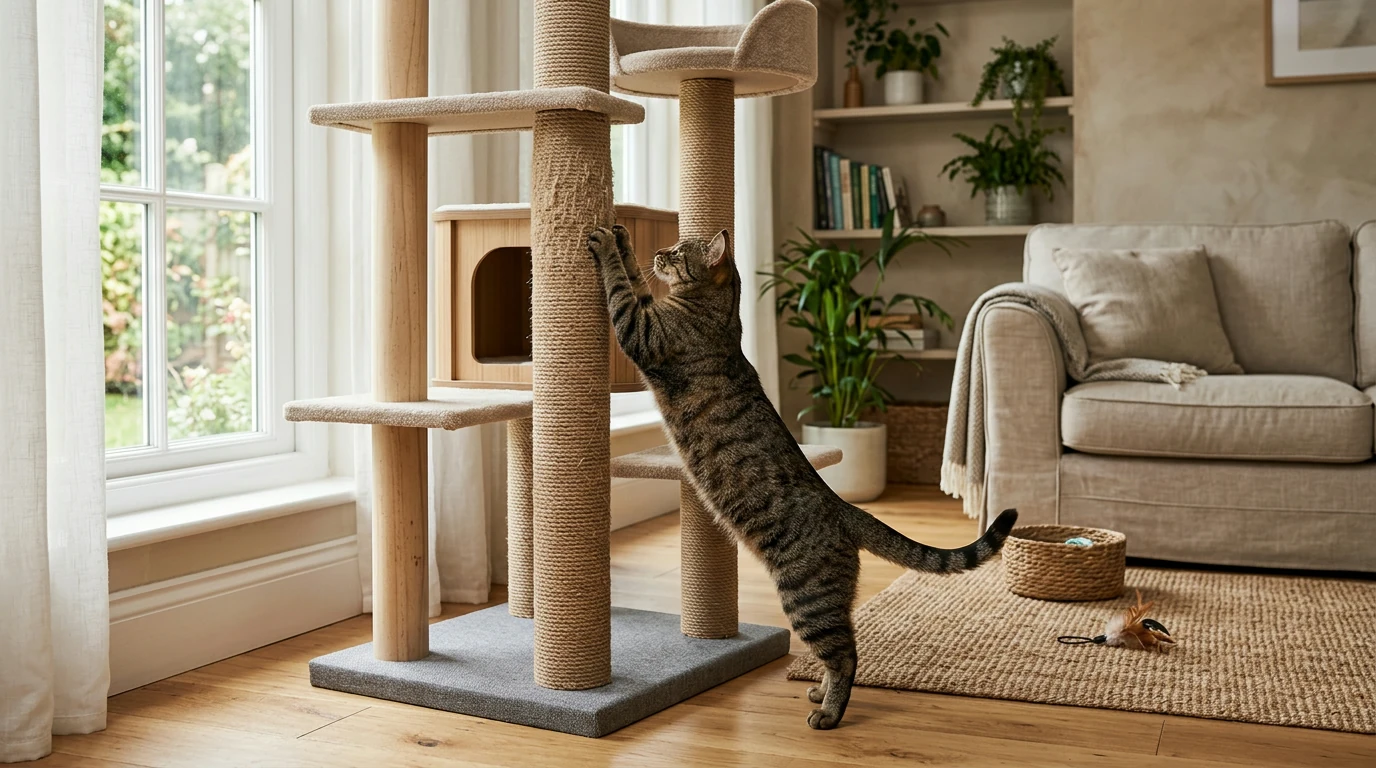
Giving your cat a place to climb and scratch can make everyday routines easier to accommodate at home. A dedicated tree offers an alternative to directing those activities toward furniture, while giving you a clear spot to observe what your cat enjoys. For more guidance, see Paws & Claws: The Secret Power Tools of Big Cats.
Our Deluxe Cat Climbing Tree & Claw Sharpener brings those activities together in one space. The key is to choose a suitable location, introduce it patiently, and keep up with regular care. For further reading, see Think Twice Before You Declaw.
A Place for Everyday Cat Activities
Scratching is a natural feline behavior. Cats use it to stretch, maintain their claws, and leave visual and scent marks. Climbing can also be part of how a cat explores its surroundings. Providing an appropriate place for these activities gives your cat an option designed for those routines.
Our Deluxe Cat Climbing Tree & Claw Sharpener is listed at $269.82 and is currently in stock. Price and availability are subject to change, so review the product page for current details before ordering.
A dedicated tree does not guarantee that your cat will abandon every other scratching spot. Preferences vary, and an appealing location can matter as much as the item itself. You may find that your cat uses the tree alongside other favorite places.
For more background on why cats scratch and how to guide the behavior, see the Cornell Feline Health Center’s guide to destructive scratching.
Finding the Right Spot
Start with a room where your cat already spends time. An accessible, comfortable spot gives your cat opportunities to investigate without needing to venture into an unfamiliar part of the home. At the same time, keep the tree away from busy walkways where people might bump into it or interrupt your cat.
Before ordering, measure the available floor space and compare it with the product dimensions. Allow room around the tree for your cat to approach and move away comfortably, and consider whether nearby doors, furniture, or household traffic will interfere with access.
Place the tree on a suitable, level surface and follow the manufacturer’s placement and assembly instructions. Once assembled, check that it is stable before inviting your cat to use it. If you need to move it later, check its stability again in the new location.
Helping Your Cat Get Acquainted
A new object can be interesting to one cat and unfamiliar to another. Give your cat time to approach the tree independently. You can place a treat nearby or use a favorite toy in the area to create a positive association, but let your cat decide whether to come closer.
Avoid placing or holding your cat on the tree to demonstrate how it works. Instead, watch for small signs of interest, such as sniffing around the base or exploring nearby. Short, relaxed play sessions can make the area inviting without turning the introduction into pressure.
Keep your cat’s other preferred scratching options available during the transition. Removing familiar choices immediately may make the change harder, especially if your cat is cautious. As you observe its habits, you can decide how the new tree fits into the rest of your home.
Simple Introduction Guide
| Step |
What to do |
| Place |
Choose an accessible spot where your cat feels comfortable. |
| Invite |
Use a treat or toy nearby without forcing interaction. |
| Observe |
Notice when and how your cat chooses to use the tree. |
If your cat ignores the tree at first, give it time. You can also consider whether another quiet location in a familiar room would make it easier to approach. Make one change at a time so you can see what helps.
Care and Safety
Supervise your cat’s initial use and keep the surrounding area clear. Check the tree regularly for loose connections, signs of wear, or instability. Address any problems according to the manufacturer’s instructions, and stop use if the tree cannot be kept stable.
Follow the manufacturer’s care instructions for cleaning and maintenance. Regular checks are especially useful after moving the tree or noticing a change in how it feels when touched. A few moments of attention can help you catch a loose part before it becomes a larger concern.
Scratching is not a substitute for regular claw checks or appropriate nail care. Look at your cat’s claws routinely and trim them as needed. If you are unsure how to trim safely, ask your veterinarian or a qualified groomer for guidance.
Make Room for a Cat-Friendly Routine
A dedicated climbing and scratching space can give your cat another way to engage in natural activities while helping you organize the areas it uses every day. There is no promise that every cat will take to the same tree, but a thoughtful placement and a patient introduction give you a practical starting point.
Our team invites you to view the Deluxe Cat Climbing Tree & Claw Sharpener for current details and shop when you are ready.
Shopping for something else, too? Our Fuel Facts vs. Fiction digital fuel guide is also in stock.
FAQ
Where should a cat climbing tree be placed?
Choose an accessible spot where your cat feels comfortable, with enough clear space around the tree. Keep it away from busy walkways and follow the manufacturer’s placement instructions.
How can I encourage my cat to use a new scratching space?
Let your cat investigate at its own pace, and encourage interest with treats or play nearby. Avoid forcing your cat onto the tree.
Does a claw sharpener replace nail trimming?
No. Check your cat’s claws regularly and provide appropriate nail care as needed.
Recommended for you












Leave a comment