A safer home starts at your child’s eye level. A dresser that has never moved, a shelf that seems too high to reach, or a chair left beside a cabinet can become a new hazard when your baby begins to crawl, pull up, and climb. We recommend starting with furniture tip-over prevention, then checking the smaller details that make rooms safer to explore.
Start with the furniture most likely to tip
Walk through the rooms where your child spends the most time. Look for dressers, bookcases, cabinets, shelving units, and storage furniture with drawers or doors a child could grab. Start with bedrooms and play areas, but do not stop there: living rooms, dining areas, and home offices often contain climbable furniture too.
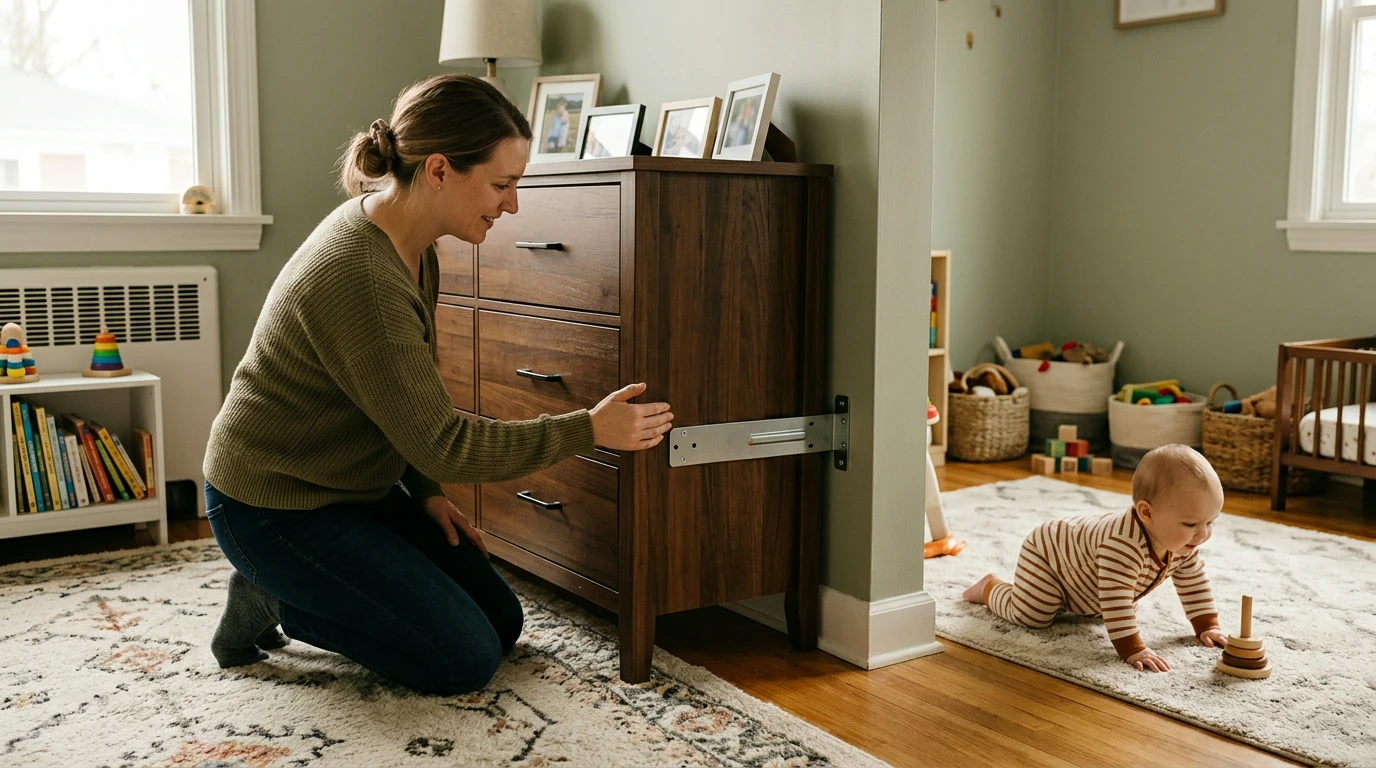
Anchor at-risk furniture to the wall with hardware appropriate for the furniture and the wall material. Follow the hardware manufacturer’s installation instructions, including its directions for fasteners and placement. Do not rely on a piece’s weight or low profile as proof that it cannot tip. An open drawer can give a child a foothold and change how the furniture’s weight is distributed.
Secure televisions separately. A TV sitting on a dresser or stand can fall even if the furniture beneath it appears stable. The U.S. Consumer Product Safety Commission’s Anchor It! campaign offers additional guidance on furniture and TV tip-over prevention.
Room-by-room furniture safety check
| Area |
What to check |
Practical next step |
| Bedroom |
Dressers, shelving, and tempting items stored up high |
Anchor furniture and move toys or other attractions off the top. |
| Living room |
TV stands, bookcases, and climbable storage |
Secure furniture and the TV; move remotes and toys away from climbing routes. |
| Dining area |
Chairs near counters, tables, or shelves |
Reposition chairs when practical and check what a child could reach from them. |
| Home office |
Filing cabinets, drawers, and shelving |
Anchor at-risk pieces and keep drawers from becoming climbing steps. |
Look beyond anchors
Make climbing less inviting
Place heavy objects on lower shelves, and remove toys, screens, and other appealing items from the tops of tall furniture. Think about the route a determined child might take, not just whether an object is currently within arm’s reach. A chair beside a bookcase or a low cabinet below a shelf can create a path upward.
Review drawers and cabinet doors your child can open. A latch can help limit access to contents, but it does not replace a furniture anchor. Treat these as separate jobs: secure the furniture against tipping, then decide whether its contents also need to be kept out of reach.
Check edges, windows, and nearby objects
At your child’s height, sharp corners and hard edges may be more noticeable than they are from where you stand. If you use edge protection, choose a type suited to the surface, install it as directed, and inspect it regularly for loose or damaged pieces.
Arrange furniture so it does not provide an easy climb to a window. Keep window covering cords out of reach, and address window safety as its own task rather than assuming furniture changes solve it. For a broader home check, you can consult HealthyChildren.org’s childproofing guidance.
Make the safety check an ongoing habit
Get down to your child’s height and scan each room. Handles, open shelves, reachable objects, and narrow gaps can look different from the floor. Watch for furniture that invites pulling up, as well as objects that could tempt a child to climb toward them.
Repeat the walk-through before your child becomes mobile, as they learn to pull up or climb, and whenever you add or rearrange furniture. A move across the room can put a previously isolated shelf beside a chair; a new storage unit can introduce drawers where there were none. Keep installation instructions for your safety hardware so you can refer to them if furniture is moved or a fastener needs attention.
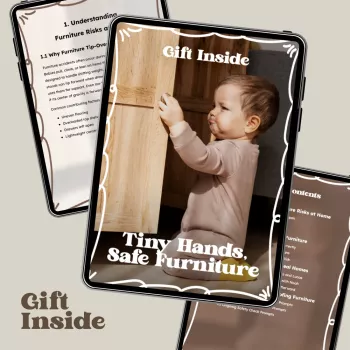
If you prefer a room-by-room prompt, our Tiny Hands, Safe Furniture guide can help you organize the furniture check. Use it to track what needs attention, while following the instructions supplied with any anchors, latches, or edge protection you choose. If several adults share household tasks, our Lead the Way guide may help with planning and follow-through; it is not a substitute for child-safety or hardware instructions.
Our team’s practical approach is to handle the highest-risk pieces first: anchor furniture and TVs, remove incentives to climb, and then work through access, edges, and room layout. You do not need to wait for a complete room makeover to make a meaningful change. Start with one room, finish the installations properly, and return to the checklist as your child’s abilities change.
FAQ
Does heavy furniture still need to be anchored?
Yes. Weight alone does not rule out a tip-over, especially if a child opens drawers or climbs. Follow appropriate anchoring instructions for the furniture and wall.
Are drawer locks enough to prevent a dresser from tipping?
No. Locks may restrict access to drawers, but they do not replace securing the dresser to the wall.
When should furniture baby-proofing be reviewed?
Review it before your child becomes mobile, again as they learn to pull up or climb, and whenever furniture is added or rearranged.
Recommended for you











Leave a comment