The best work shoes make getting dressed feel easier. Whether your week includes desk days, a long commute, or a mix of home and office, a small rotation of polished, comfortable pairs can serve more outfits than a closet full of shoes you rarely wear. We like to start with your actual schedule, then choose styles that fit it.
What Does “Casual” Mean at Your Workplace?
A relaxed dress code leaves room for personality, but it does not necessarily make every casual shoe office-ready. Clean, well-kept sneakers may look at home beside tailored separates; a worn pair of running shoes may not. Your workplace’s expectations matter more than any general rule about what counts as stylish.
Look at the day ahead, too. A client meeting might call for a more polished pair than an ordinary desk day. A commute with plenty of walking can make comfort the priority, while a work-from-home day may barely call for shoes at all. If your job involves footwear hazards, keep safety requirements separate from style decisions. OSHA’s foot-protection standard addresses when protective footwear is required; an attractive everyday shoe is not a substitute.
The Shoes That Make a Quiet Statement
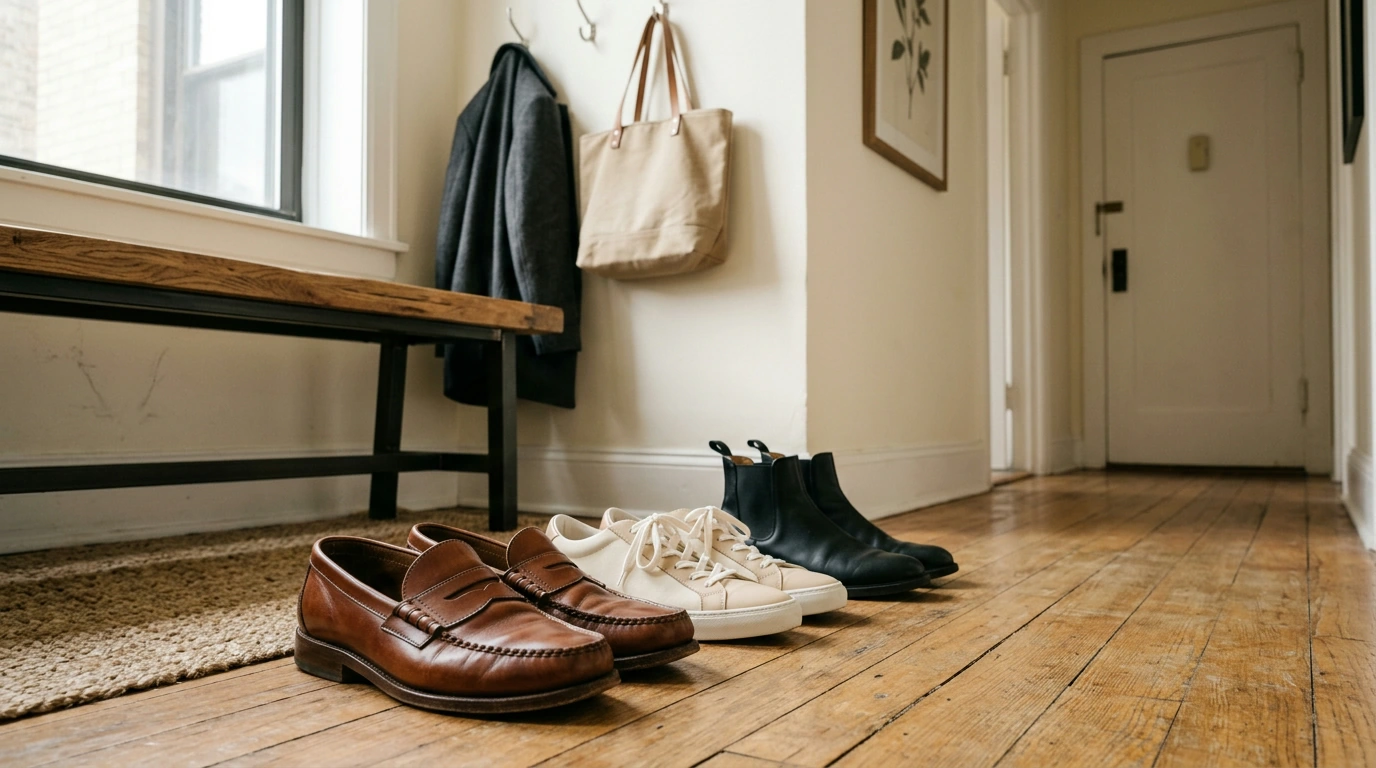
Streamlined loafers, minimal sneakers, simple flats, and refined ankle boots are useful options—not a checklist you need to complete. The right starting point depends on what your office allows, what you wear, and how far you walk. A loafer can sharpen dark denim where denim is permitted; a low-profile sneaker can relax a suit without making it feel careless.
Small design choices help casual shoes look intentional. Clean lines and restrained hardware are easy to repeat across outfits. Black, brown, cream, and other colors you already wear often can connect separate pieces of your wardrobe. You do not have to choose only neutrals, but a new shoe earns its place more easily when you can picture it with several workday outfits.
A quick guide to casual work shoe styles
| Style |
Pairs well with |
Check before choosing |
| Streamlined loafers |
Tailored trousers, midi skirts, dark denim where permitted |
Heel fit and room across the toes |
| Minimal sneakers |
Relaxed suiting and smart-casual separates |
Office rules and sole support |
| Simple flats |
Dresses, wide-leg trousers, lightweight layers |
Cushioning and secure fit |
| Refined ankle boots |
Cool-weather outfits and straight-leg trousers |
Shaft fit and walking comfort |
Build a Shoe Rotation Around Your Week
Three roles make a practical starting point: a polished everyday pair, a comfortable option for commute-heavy days, and a pair for dressier plans or a change in season. These are roles, not necessarily three purchases. One well-chosen shoe may cover more than one of them, and you may already own what you need.
To make the rotation easy to use, repeat a few compatible colors. For example, if your everyday bag, belt, or favorite trousers work with brown, a brown loafer and a similarly toned boot may give you more outfit choices than two unrelated statement pairs. The goal is not perfect matching. It is being able to choose shoes quickly when you are getting ready.
A hybrid schedule changes the math. If you travel to the office twice a week and spend both days on your feet, your commute-friendly pair may deserve more attention than a dressier shoe you would wear once a month. Before adding anything, count the days you actually spend out of the house and notice which pair you repeatedly reach for—or wish you had.
Comfort Details Worth Checking
Style matters less if you are thinking about your feet all afternoon. Your toes should have room to rest without being squeezed together, and your heel should feel secure rather than slipping with every step. Notice how the sole moves as you walk and whether the shoe feels stable on the surfaces you encounter during your day.
Try shoes with the socks or hosiery you expect to wear to work. A fit that feels right barefoot can change with a thicker sock, and a flat that feels secure with hosiery may behave differently without it. Take more than a few steps when possible: walking, turning, and standing can reveal pressure points that a quick try-on misses. If a workplace requires protective footwear, follow those requirements even when a different pair better suits your outfit.
Make Getting Dressed Simpler
On a busy morning, begin with the day’s activities. Decide whether you need to prioritize walking comfort, a meeting-ready look, weather coverage, or required protection. Choose the appropriate shoes, then build the outfit around them. It is often simpler than getting dressed first and trying to make an uncomfortable or unsuitable pair work afterward.
If you want a dedicated companion for planning modern office footwear, hybrid-work style, and a smart shoe rotation, our Quietly Stylish Casual Work Shoes Guide is a $5.99 eBook. We see it as an option for you if these decisions come up often, not a prerequisite for putting together a useful rotation. Our team’s simplest advice remains the same: let the shoes you choose serve the workdays you actually have.
Compare related options such as Dolce & Gabbana Silk Medusa Shirt – Short Sleeve Cuban Collar Style to match features, dimensions, and use case before choosing.
FAQ
Can sneakers count as casual work shoes?
Yes, in some workplaces. A clean, understated pair can work with smart-casual outfits, but your dress code and the day’s meetings come first.
How many pairs of work shoes do I need?
There is no set number. Start with the pairs you need for ordinary office days, higher-walking days, and occasions that call for a dressier look; one pair may cover more than one need.
Recommended for you












Leave a comment