When the day feels scattered, a few minutes of steady movement can give you a welcome pause. Our Grounding Yoga Poses Checklist is a printable digital guide designed to help you make space for stress relief, balance, and focus. You can use it as a gentle reminder to slow down, notice your breath, and return to your day with more intention—without turning a calming practice into another obligation.
Start with a moment of stillness
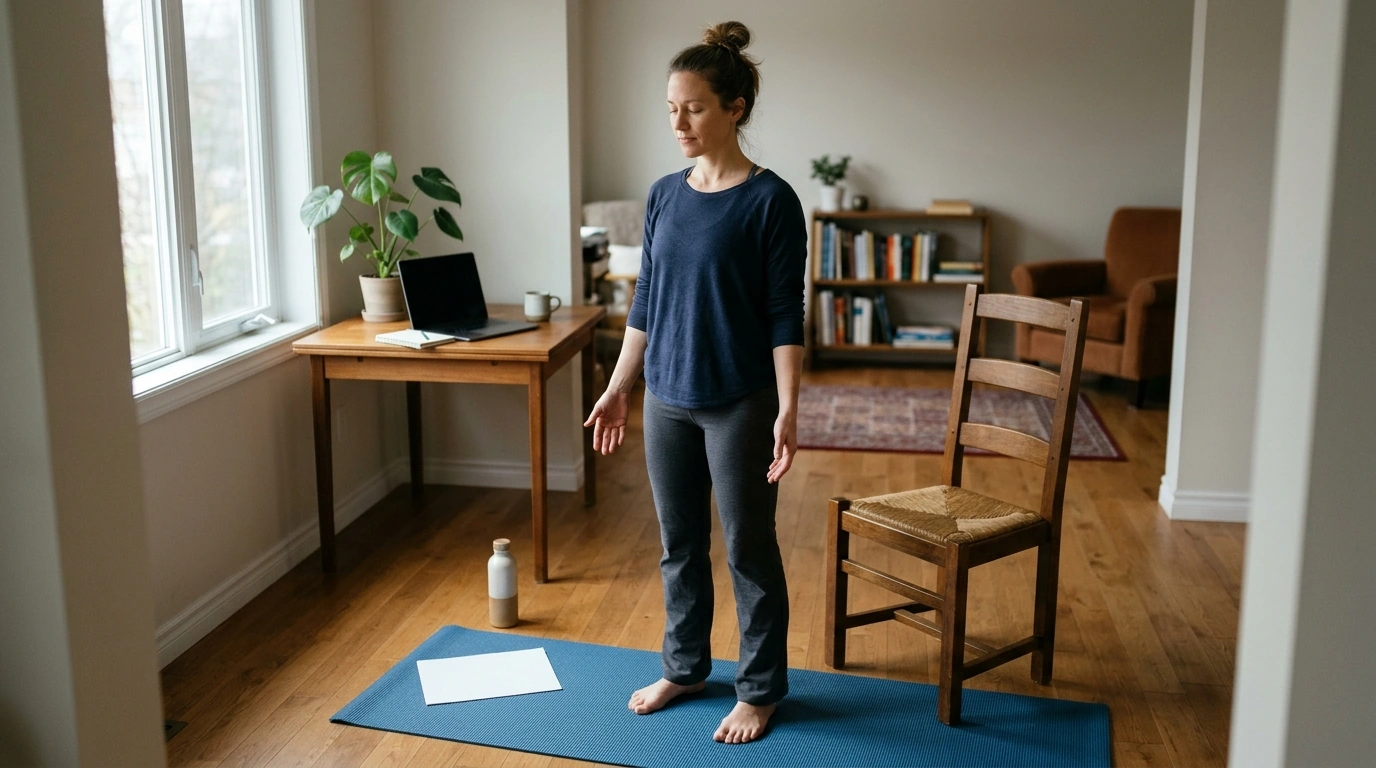
Before choosing a pose, notice where you are. Feel your feet on the floor or your body resting against a chair. Let your shoulders soften and take several comfortable breaths. You do not need to breathe at a particular pace or make each breath deeper than the last. The goal is simply to give yourself a moment to arrive.
Pick a time you can realistically repeat. That might be before work, between tasks, or after you close your laptop for the day. A short practice that fits your schedule can be more useful than an ambitious routine you rarely have time to do. If you print the checklist, keep it beside your mat or somewhere you will see it when you want a break.
Build a gentle grounding sequence
Start in a stable standing position, with your feet placed where you feel comfortable. Notice how your weight shifts as you stand. If a forward fold feels good, soften your knees and bend only as far as you can without straining. You can also skip the fold and choose another comfortable shape. Grounding does not require you to reach the floor.
If you want to add a balance pose, place a wall or sturdy chair within reach. Some days you may feel steady; on others, you may wobble or prefer to keep both feet down. Responding calmly and adjusting your position is part of practicing balance. You do not need to hold perfectly still for the movement to be worthwhile.
Finish seated or resting, and give yourself a minute to notice how you feel before moving on. Our checklist can prompt a repeatable sequence, but you do not have to complete every pose each time. Move within a comfortable range, and stop if you feel pain, dizziness, or unusual discomfort.
A simple way to pace your practice
| Stage |
Try this |
Keep in mind |
| Arrive |
Stand or sit comfortably and take a few easy breaths. |
Notice your contact with the floor or chair. |
| Move |
Choose a few comfortable grounding poses. |
Move slowly and use support when helpful. |
| Pause |
Rest and observe how you feel. |
Let this be a transition, not another task to rush. |
Make the checklist work for your day
On a busy morning, you might choose just a few movements and pay attention to each transition. For an evening reset, you might leave more time between poses and rest longer at the end. Neither version is more successful. What matters is choosing a pace that works for you today.
Print the guide if you prefer a screen-free practice, or keep the digital download handy for a quick reminder. Marking what you practiced can help you notice which movements feel supportive over time. You may find that a standing pose suits one part of your day while a seated pause suits another. Some days call for movement; others call for rest. Treat the checklist as a flexible aid, not a scorecard.
If you are also looking for a way to bring more intention to your workday, our Lead the Way leadership guide offers a separate resource for thinking about how you guide others. You do not need an additional guide to practice yoga; it is simply another option when a calmer pause is part of a broader effort to approach your day thoughtfully.
Practice with comfort and care
Make enough room to move without bumping into furniture, and choose a non-slip surface. Wear something that lets you move comfortably. You can shorten a pose, use support, or leave it out entirely. A gentle practice should give you room to pay attention to your body rather than push through warning signs.
The National Center for Complementary and Integrative Health notes that yoga is generally considered safe for healthy people when practiced appropriately, while injuries can occur. Its Yoga for Health resource also discusses adapting practice to individual needs. If you are pregnant, recovering from an injury, managing a health condition, or unsure whether a pose is right for you, ask a qualified healthcare professional or yoga instructor about suitable modifications.
When you want a simple starting point, our Grounding Yoga Poses Checklist is available as a $4.99 digital download. Use it to support a few attentive minutes whenever they fit your day, and let comfort—not completing a list—guide what you do next.
FAQ
How long should a grounding yoga practice take?
There is no required length. Start with a few comfortable minutes and allow more time when it suits your day.
Do I need to be good at balancing to use a grounding yoga checklist?
No. You can use a wall or chair, adjust or skip poses, and prioritize stability and comfort over holding perfectly still.
Is the guide a physical product?
No. It is a printable digital download, not a physical product.
Recommended for you












Leave a comment