A car repair bill is hard to evaluate when the total exceeds the estimate or includes work you do not recognize. Before you decide whether a charge is unfair, gather the paperwork and identify exactly what changed. A calm, specific question is more likely to get a useful answer than a dispute over the total alone.
Before You Approve the Repair
Ask for a written estimate that separates parts, labor, diagnostic fees, taxes, and other charges. Find out whether the shop will contact you before doing additional work, and ask how it records your approval. Save the estimate and any texts or emails; after a phone call, note the date, the person you spoke with, and what you authorized.
Ask whether replacement parts will be new, used, rebuilt, or aftermarket, and get the warranty terms in writing. If the repair is expensive and the vehicle is safe to move, a second estimate can help you compare the proposed work before you commit. Do not drive a vehicle the shop has identified as unsafe merely to obtain another quote.
Compare the Bill With What You Authorized
Put the estimate, work order, approval messages, and final invoice side by side. Look for added repairs, changed part descriptions, higher labor charges, and fees that were not clear upfront. An increase is not automatically improper: a technician may uncover another problem after work begins. The important questions are what changed, when the shop told you, and what you agreed to pay.
Bill-checking worksheet
| What to compare |
Question to ask the shop |
Record to keep |
| Estimate versus final total |
What caused each increase? |
Written estimate and itemized invoice |
| Authorized versus completed work |
When and how was added work approved? |
Work order, texts, emails, and call notes |
| Parts and labor |
Which parts were installed, and what labor was billed? |
Part descriptions and warranty paperwork |
| Fees and taxes |
What does each separate charge cover? |
Itemized invoice and payment receipt |
Use the worksheet to choose two or three precise questions for your first conversation. For example, “The estimate lists one part, but the invoice lists a different one. What changed?” gives the shop something concrete to address. The Federal Trade Commission’s auto repair guidance is also a useful reference for understanding estimates, invoices, and your options when problems arise.
How to Raise a Disputed Charge
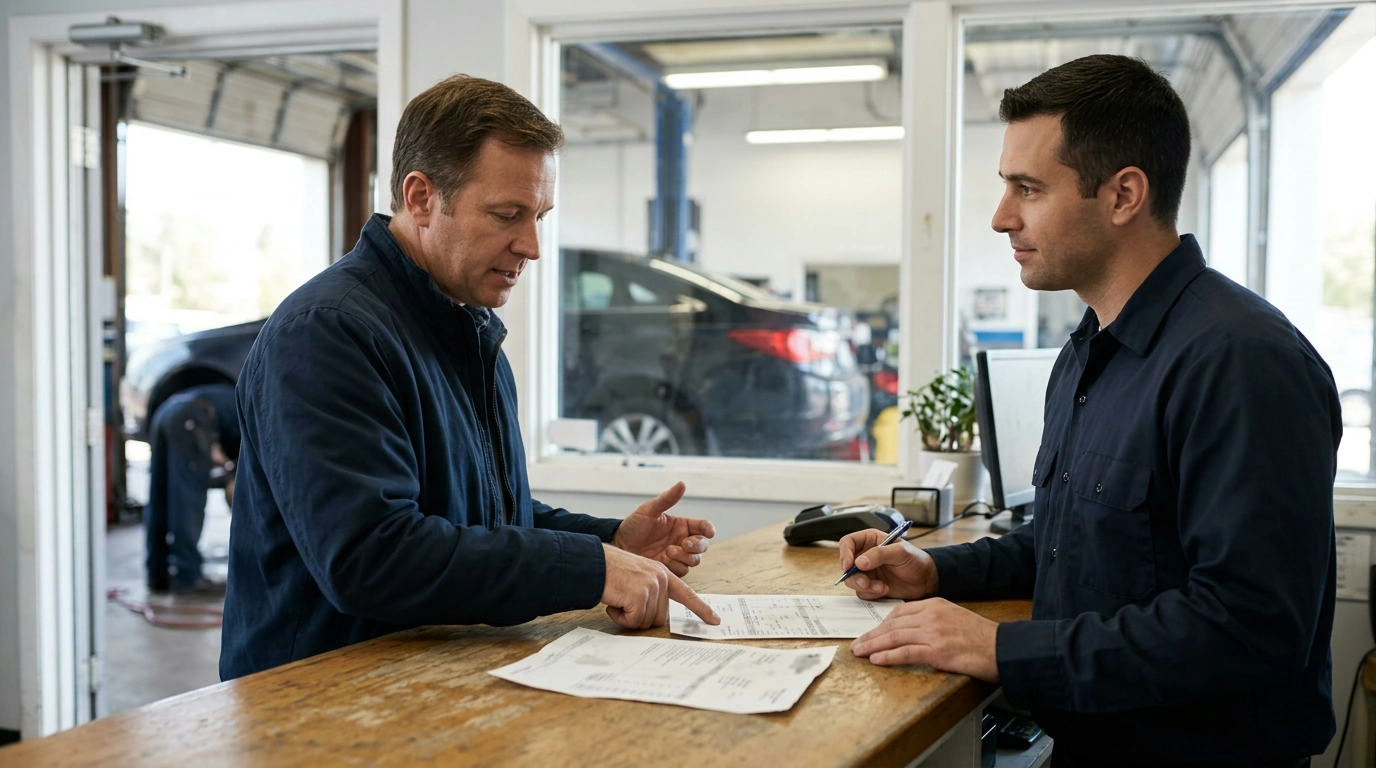
Start with the service adviser or manager. Point to the line item, explain your concern without guessing at the cause, and request an itemized explanation. Bring copies rather than your only originals. Write down who you spoke with, when you spoke, what they explained, and any resolution they offered.
If the shop identifies a billing error, request a corrected invoice or written confirmation of the refund. If the disagreement is about whether a repair was needed or performed correctly, an independent assessment may help you evaluate the work. Ask the assessor to describe their findings in writing, and keep that assessment with your other records.
Stay focused on the charge you can document. “I do not see an approval for this additional repair” is clearer than “the whole bill is too high.” You can raise other concerns once you understand the shop’s explanation.
If You Cannot Resolve It With the Shop
Send a short written summary identifying the disputed charges, the records supporting your position, and the outcome you want. Keep a copy and note when and how you sent it. State rules on estimates, authorization, and complaints vary, so consult your state consumer protection agency or attorney general’s office rather than assuming one rule applies everywhere. USA.gov’s car complaints page can help you find a place to start.
If you paid by card, review your card issuer’s dispute instructions promptly; deadlines and required documentation may apply. A card dispute does not replace a clear record of what happened with the shop. For a substantial disagreement, consider local consumer legal assistance before withholding payment or taking a step that could affect access to your vehicle.
Keep a Repeatable Plan for Your Next Repair
Store estimates, approvals, invoices, receipts, and warranty paperwork together, whether in a folder or a digital file. Before the next repair, ask for an itemized estimate and a call before additional work begins. Those two habits make it easier to spot a change while you can still make a decision.
If you want a dedicated resource to keep with your records, our Fighting Unfair Car Repair Bills: A Complete Guide for Car Owners to Challenge Excessive Charges and Save Money is available for $19.99. Our team also offers Fuel Facts vs. Fiction for $11.99 if you want a separate guide to everyday fuel choices; it is not a substitute for repair records or an independent assessment.
FAQ
Can a repair shop charge more than its estimate?
Rules depend on your location and what you authorized. Compare the estimate with the invoice, ask when added work was approved, and review applicable state requirements.
What should I do if I do not recognize a charge?
Ask the shop for an itemized explanation and identify the charge in writing. Keep the estimate, invoice, approvals, and notes from your conversation.
Where can I turn if the shop will not correct a disputed bill?
Review complaint options through your state consumer protection agency or attorney general’s office. For a significant dispute, consider local legal advice.
Recommended for you













Leave a comment