A travel food budget works best when it leaves room for both planning and pleasure. You do not have to avoid restaurants to spend less on the road. Instead, decide which meals are worth buying, make the others easy to handle, and keep enough flexibility for delays or a place you are excited to try.
Give Every Travel Day a Food Plan
Before you leave, count the meals and snacks you will need on the way to your destination, during your stay, and on the return trip. Then look at what is already covered. Is breakfast included with your room? Will you have a refrigerator, microwave, or kitchen? Those details can change what is practical to pack or buy.
Set a daily food amount with a little room for surprises. Pick one meal you would genuinely enjoy buying, then plan simpler options around it. A satisfying lunch out, for example, may feel more worthwhile when breakfast is included and dinner can be assembled from groceries. Our featured option, The Smart Way to Eat on the Road: Save Money on Food While Traveling, can help keep your travel-food spending goal front and center as you make those choices.
Pack Food That Suits the Trip
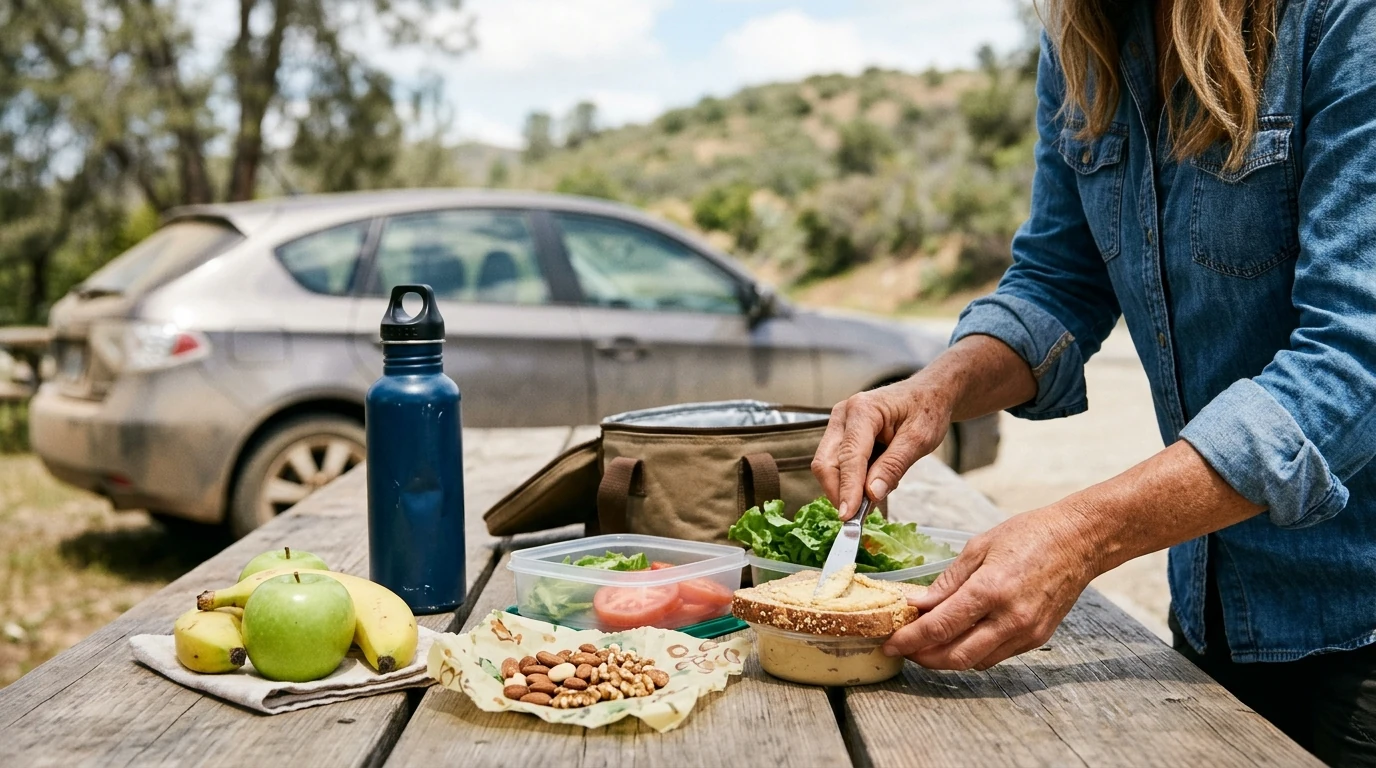
For a short drive, start with foods that are easy to carry and eat: whole fruit, crackers, nuts, or sandwiches. Portion snacks before departure so you can reach for one when a convenience-store stop becomes tempting. Pack enough for the time you will actually be traveling, not an imagined itinerary in which every meal comes from your bag.
Match perishable foods to the equipment you have. If something needs refrigeration, use a properly packed cooler and follow USDA guidance for keeping food safe on the road. A warm car is not food storage. If keeping food cold will be difficult, choose shelf-stable snacks and plan to buy your next meal.
A refillable water bottle can also make stops easier where refills are available. Flying calls for a different packing plan than driving: review the TSA’s “What Can I Bring?” guidance before you pack food or liquids for a security checkpoint.
Choose When to Buy—and When to Bring
The lowest price on paper is not always the best choice. Food that spoils, takes up space you do not have, or leaves you hungry can cost more in the end. Use your itinerary to decide what to bring and what to buy, rather than applying one rule to every meal.
A practical meal plan for common travel moments
| Travel moment |
Budget-friendly move |
What to check |
| Leaving home |
Eat before departure or pack the next meal |
How long the food can be kept safely |
| Long driving stretch |
Keep a ready-to-eat snack within reach |
Whether the next planned stop has affordable options |
| Overnight stay |
Use an included breakfast or buy groceries for a simple meal |
Available storage and preparation facilities |
| Exploring a destination |
Choose one meal to enjoy out and simplify another |
Menu prices, portions, and your daily budget |
Buying food deliberately is different from refusing to buy it. A local meal you are excited about may be a better use of your budget than several unplanned snacks that never quite add up to dinner. Give yourself permission to spend on the meal that matters to you, and make the surrounding decisions easier.
Make Stops Work Harder for Your Budget
When you need to shop, compare the total cost of a few meal components with a ready-made meal. Groceries are not automatically cheaper, especially if you are staying only one night or cannot store leftovers. Ask how many portions you will realistically use before moving on. A smaller purchase that you finish may be better value than a large package you have to discard.
Look at menus before you are very hungry. A quick price check can help you choose a place you actually want to eat instead of settling for the nearest option. On a driving trip, it can also help to identify a possible food stop before the next long stretch. Our Fuel Facts vs. Fiction digital fuel guide is another option for readers planning road-trip spending beyond meals.
Keep a small reserve of shelf-stable snacks for delays. It gives you breathing room when a planned meal happens later than expected or the available options cost more than you intended. You can still buy dinner; you simply do not have to decide while you are urgently hungry.
Keep the Savings Simple Enough to Repeat
At the end of each day, note what you spent and whether the plan fit the way you traveled. You might discover that a packed lunch was convenient but that grocery shopping after a late arrival was not. Adjust the next day instead of trying to recover every dollar at once. Small changes are easier to keep using than a rigid plan that makes the trip less enjoyable.
Start with the habits that suit your route: plan one meal to enjoy, carry useful snacks, and buy only what you can safely store and realistically eat. If you want to keep that approach top of mind, explore The Smart Way to Eat on the Road: Save Money on Food While Traveling alongside your travel plans.
FAQ
How can I save money on food while traveling without cooking every meal?
Choose the meal you most want to buy, then use packed snacks, an included breakfast, or simple grocery options for other meals. Leave a little room in your budget for spontaneous plans.
What foods are easiest to bring on a road trip?
Shelf-stable, ready-to-eat foods such as crackers and nuts, along with whole fruit, are easy to carry. Perishable foods need appropriate cold storage and safe handling.
Is buying groceries always cheaper than eating out while traveling?
No. Compare the total cost, usable portions, storage needs, and potential waste, especially during a short stay.
Recommended for you












Leave a comment