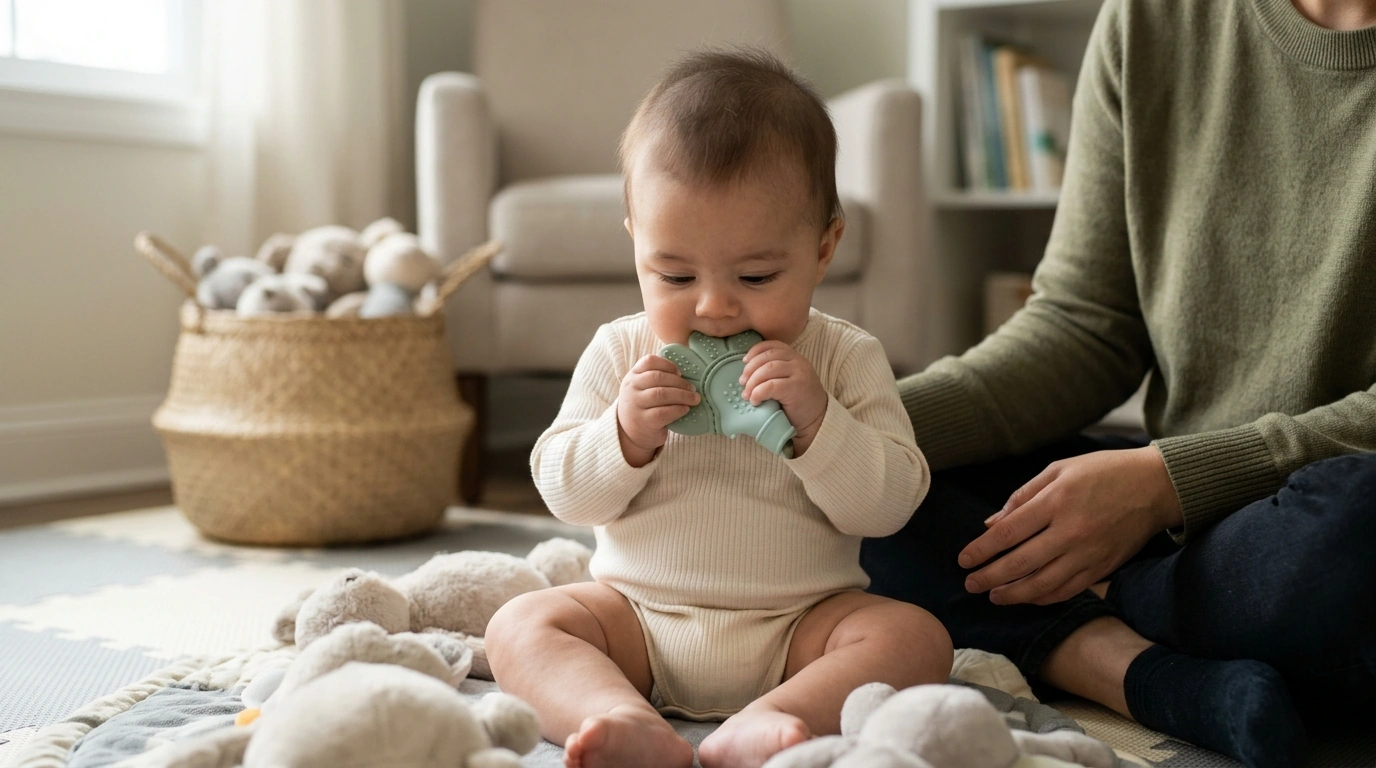
Teething can make an ordinary afternoon feel a little fussier. Your baby may want to chew, reach for your hand, or simply stay close. An appropriate teether can give them something to explore during awake play, while you stay nearby and offer comfort. Our Silicone Baby Teether Glove – Soft Flower Shape Teething Toy for Infants is one option for those moments. It is not a promise to stop teething pain, and it does not have to be the answer every time your baby seems uncomfortable. For more guidance, see Soothing Effect of an Edible Teether: A Pilot Study in Children ….
A gentle option for everyday teething moments
Our flower-shaped teether glove is a silicone teething toy for infants. That simple description is a useful starting point: whether it belongs in your routine depends on your baby’s developmental stage, the product’s age and use instructions, and your baby’s interest in it. For further reading, see Teething Pain: Risky Remedies to Avoid.
You might offer the teether during supervised play when your baby is awake and looking for something to chew. Give them a moment to explore it without pressing them to use it. If they turn away, drop it, or reach for you instead, you can put it aside and try a cuddle or another familiar soothing routine. When playtime ends, put the toy away rather than leaving it within reach in a sleep space.
Babies have preferences, and those preferences can change throughout the day. A teether is one comfort option alongside your attention—not a replacement for being held, fed, changed, or checked when something else may be bothering your baby.
Choose the right moment to offer it
An awake, alert baby who is showing interest in chewing may be ready for a supervised teether session. Before offering any teething toy, read its age and use instructions and consider whether it suits your child’s current developmental stage. Stay with your baby while they use it, and notice how they respond rather than assuming they will want it because they seem fussy.
It also helps to pause before calling every uncomfortable moment “teething.” Hunger, tiredness, a wet diaper, or illness may call for a different response. This quick guide can help you choose a next step without trying to diagnose the cause:
A quick guide to teething-time choices
| What you notice |
A practical next step |
| Baby wants to chew during awake play |
Offer an appropriate teether while supervising. |
| Baby wants closeness more than a toy |
Try a cuddle or another familiar soothing routine. |
| Baby has a fever, diarrhea, or seems unusually unwell |
Contact a pediatrician rather than assuming teething is the cause. |
If your baby refuses a teether, you do not need to keep presenting it. Set it aside and respond to what they seem to need now. You can offer it again at another suitable awake-play moment, provided it remains in good condition and appropriate for their age.
Keep teether time clean and supervised
Make a quick inspection part of your routine before each use. Look over the teether, and stop using it if you find damage. Clean it according to the product’s care instructions before offering it again. Because care methods vary, do not assume a teether can go in the dishwasher, be sterilized, or be placed in the freezer.
Some caregivers consider chilling a teether. Check this product’s instructions before chilling it or otherwise preparing it; do not freeze it unless the directions specifically allow that use. Following the stated care directions helps you avoid improvising with a toy your baby will put in their mouth.
Keep teether use to awake, supervised time. Remove teething toys before naps and bedtime, and keep them out of sleep spaces. Do not attach a teether to a cord or necklace. These boundaries are easier to maintain when you treat the toy as something you bring out for a short play session and put away afterward.
Small comforts alongside a teether
A toy is only one way to respond to a baby who seems uncomfortable. A cuddle, a calm change of activity, or gently rubbing your baby’s gums with a clean finger may be worth trying, while following your pediatrician’s guidance. You know your baby’s usual patterns, so pay attention when their behavior feels different from an ordinary fussy spell.
A chewable teething toy is also different from teething jewelry or a numbing product. The FDA’s guidance on soothing teething pain discusses safety concerns with certain teething remedies. Speak with your pediatrician before using remedies or medicine, especially if you are unsure what is appropriate for your baby. For everyday mouth-care guidance as your child grows, you can also consult the CDC’s children’s oral health information.
Our team keeps the choice practical: look for a toy that suits your baby’s stage, follow its instructions, supervise its use, and let your baby’s response guide you. You can view our flower-shaped silicone teether glove and decide whether it fits naturally into your routine. If you are browsing other parts of our store, our Fuel Facts vs. Fiction digital guide is a separate resource for everyday driving decisions—not a baby-care product.
FAQ
When can my baby use a teether glove?
Follow the product’s age and use instructions, consider your baby’s developmental stage, and supervise every use.
Can I freeze this silicone teether?
Do not freeze it unless the product instructions specifically allow it. Check the care directions before chilling it.
Is a fever a normal sign of teething?
Do not assume a fever is caused by teething. Contact your pediatrician if your baby has a fever or seems unwell.
Recommended for you












Leave a comment