A pantry works best when you can see what you have, find what you need, and notice what to use next. You don’t need a set of matching jars or a free weekend to get there. We recommend starting with one shelf and a few habits you can repeat during an ordinary week.
Start with a quick pantry reset
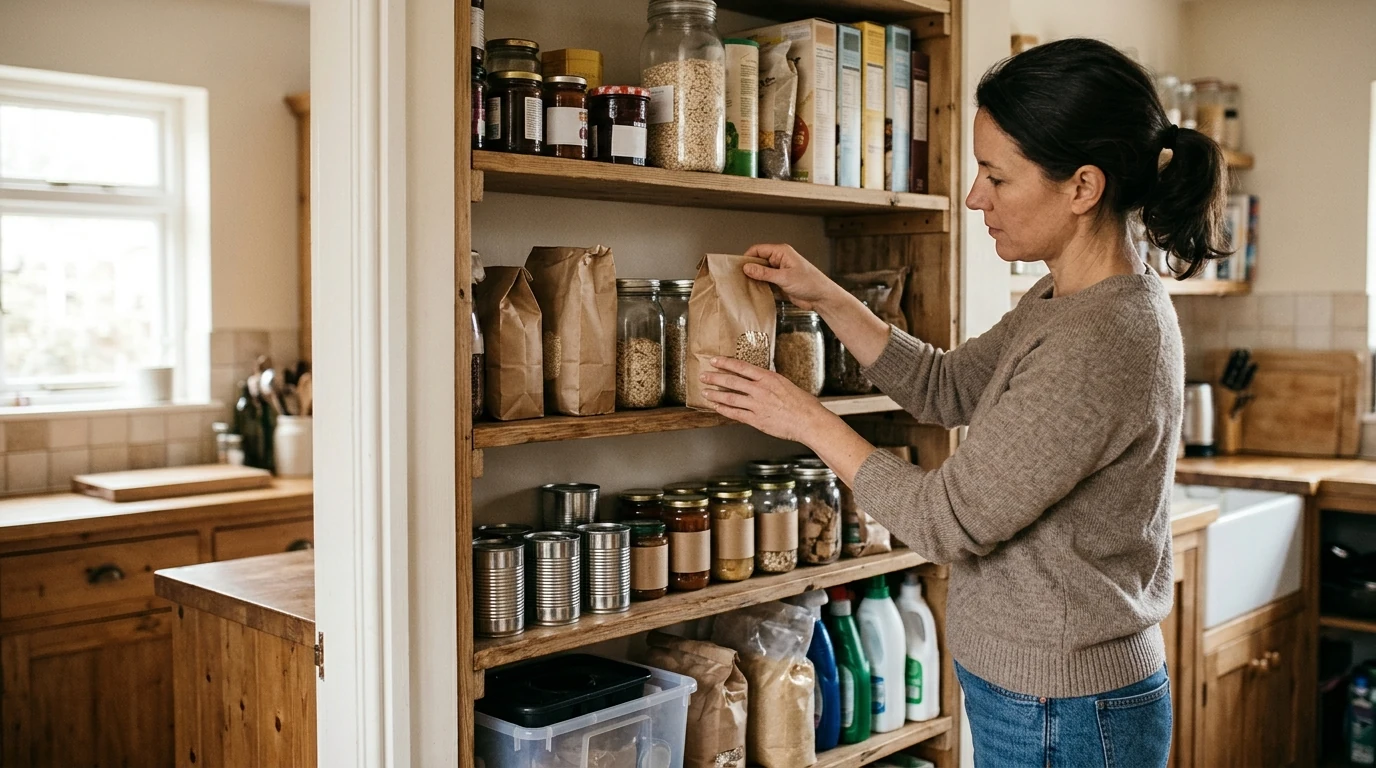
Take everything off one shelf, rather than emptying the whole pantry at once. As you go, check packages for damage and read storage directions and date labels. Bring duplicates together so you can see what you already own. Set aside foods you’re unlikely to use; unopened items that meet your local food pantry’s guidelines may be suitable to donate.
Wipe the empty shelf and let it dry before replacing anything. Then return the items you use, with labels facing outward where possible. Finish that shelf before moving to another. If you only have time for one, you’ve still made a useful improvement—and you’ll have a clearer place to start next time.
Give every item a place
Choose broad zones that reflect how you cook: breakfast, baking, grains, canned goods, snacks, or meal starters. Keep the items you reach for most within easy reach, place heavier items on lower shelves, and use awkward spaces for supplies you need less often. A zone doesn’t have to fill a whole shelf; it just needs a place you can return to consistently.
Buy containers only when they solve a particular problem, such as packages that won’t stand up or small items that scatter. Original packaging is often the simpler choice, especially when it carries preparation directions, storage instructions, or date information. If you transfer food, preserve the information you’ll need later.
Our team uses the layout below as a starting point, not a rule. Adjust the zones to your space and the foods you actually keep.
A practical pantry layout
| Zone |
What goes there |
Simple upkeep habit |
| Everyday staples |
Frequently used grains, oils, and cooking basics |
Check before adding them to a shopping list |
| Meal starters |
Canned goods, sauces, and shelf-stable proteins |
Move older purchases toward the front |
| Breakfast and snacks |
Foods household members reach for often |
Return opened packages to the same spot |
| Backstock |
Unopened duplicates |
Restock the everyday zone from here first |
If other people use the pantry, keep the zones easy to recognize. A small shelf label may help, but you can also simply agree on where common items belong. The goal is to make putting groceries away nearly as straightforward as taking them out.
Make the system work during a busy week
Keep a short “use soon” list somewhere you’ll see it before planning meals. It might include an opened ingredient, a package nearing its labeled date, or something you bought for a recipe that changed. The list is a planning reminder, not a food-safety judgment: always follow the product’s directions when deciding how to store or use it.
Before shopping, scan the zones for the meals you have in mind, then check backstock. That quick look can keep you from buying another package just because the everyday spot looks empty. When you unpack groceries, put newer purchases behind suitable older ones so the older items remain visible. Don’t let a tidy arrangement override any storage instructions on the package.
Once a week, spend about five minutes returning misplaced items and noting what’s running low. You don’t have to reorganize each time. If a zone repeatedly overflows or people can’t find what belongs there, adjust the zone instead of expecting everyone to remember a complicated system.
Use written guidance when it helps
If you prefer a plan you can refer to while you work, our A Simple System for an Organized Pantry – 10 in 1 Bundle of Guides, eBooks & Checklists is an option to consider alongside a hands-on reset. You can review the bundle and decide whether written guidance fits the way you like to tackle household projects.
Whichever approach you choose, give yourself one task at a time: sort a shelf, establish a breakfast zone, or add a backstock check to your shopping routine. That’s easier to maintain than trying to make every shelf look finished in one day. If you’re coordinating a broader household project, we also carry Lead the Way: A Practical Guide to Inspiring and Guiding Others; it’s a general leadership guide, not a pantry-organizing resource. For the pantry itself, start with the foods and shelf space in front of you.
Keep food safety separate from shelf tidiness
An orderly pantry makes labels easier to read and packages easier to inspect, but neat shelves do not make food safe. Follow package directions, especially instructions to refrigerate a product after opening. Don’t rely on appearance alone when you have a question about whether a food has been stored safely.
For general storage guidance, consult FoodSafety.gov’s FoodKeeper resource. The FDA’s food storage guidance is another resource when questions come up. Keeping packages accessible, rather than packing shelves too tightly, gives you room to read directions and notice potential problems.
FAQ
Do I need matching containers to organize a pantry?
No. Start by grouping items and giving them consistent places. Add containers only when they make a particular shelf easier to use.
How often should I reset my pantry?
A brief weekly tidy and a scan before grocery shopping can help you maintain the system. Do a deeper check when shelves become hard to navigate.
Where should I start if my pantry feels overwhelming?
Choose one shelf or category, remove and check its contents, then put back what you use in a clearly defined spot.
Recommended for you











Leave a comment