What are some examples of cooperative play?
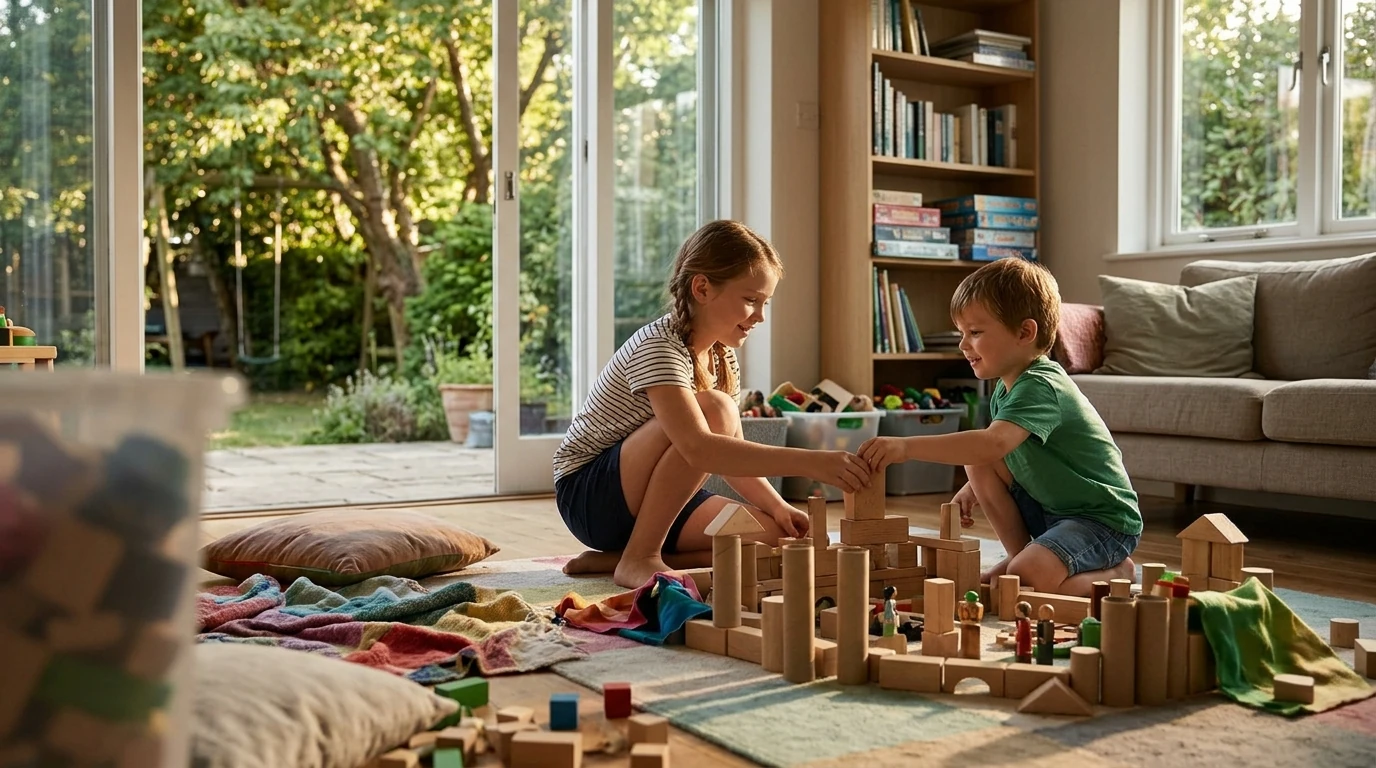
Cooperative play happens when children work together toward a shared goal. They might build a tower, act out a story, or invent a game with rules everyone follows. Each child contributes, and the group’s idea grows through communication and teamwork.
For siblings, these activities can turn everyday playtime into a chance to practice sharing ideas, solving problems, and taking turns. You can find more ways to support those moments in our guide to nurturing cooperative play among siblings.
Building something together
Offer blocks, interlocking bricks, or cardboard boxes and invite children to make one shared creation. One child might build a bridge while another adds a road. Encourage them to agree on a plan and adjust it together if their structure falls.
Playing pretend as a team
A pretend restaurant, veterinary clinic, or grocery store gives children roles that depend on one another. They can take turns being the customer, helper, or manager, deciding together what happens next. Simple props such as play food, baskets, and dress-up accessories can help get the story started.
Making a group artwork
Spread out a large sheet of paper and let children create a mural together. They might choose a theme, such as an underwater world, and add different creatures or scenery. Washable markers, crayons, and stickers make it easy for everyone to contribute.
Completing a shared challenge
Children can work together on a puzzle, create an obstacle course, or hunt for items in a scavenger hunt. For a puzzle, one child can look for edge pieces while another sorts colors. Choose a challenge that gives each child a meaningful part without making one person responsible for all the difficult work.
Inventing a game with shared rules
Invite siblings to make up a ball-toss game or a dance routine. They can agree on the rules, try them out, and change them if the game is not working. With younger children, keep rules simple and use soft, age-appropriate equipment in a clear play area.
FAQ
How can you help siblings cooperate during play?
Start with a shared goal and give each child a role, while leaving room for them to exchange ideas. If disagreements arise, help them name the problem and suggest taking turns or finding a solution they can both accept.
Recommended for you












Leave a comment