Cold weather can change your cat’s routine, even if they spend most of the day indoors. A comfortable resting spot, accessible water, and a quick check after outdoor time can make winter easier on both of you. We recommend keeping the routine simple enough that everyone in your household can follow it.
Start with a warm, comfortable indoor space
Give your cat a dry, draft-free place to rest. Move bedding away from exterior doors and chilly windows, and choose a spot your cat can reach without a difficult jump. That matters especially for senior cats and cats with limited mobility. If you close off a cold room, make sure your cat can still get to food, water, and the litter box.
Warmth should never come at the cost of safety. Keep your cat away from space heaters, fireplaces, and exposed cords. If you use a heated pet bed, follow its instructions, inspect it regularly, and leave room for your cat to move away from the heat. Avoid placing your cat directly against a heating pad or other concentrated heat source.
Make a quick winter check part of the day
You do not need an elaborate schedule. A few checks at predictable times can help you catch a frozen water bowl, damp paws, or a change in behavior before it is overlooked. Use our checklist as a starting point, then adjust it for your cat’s age, health, and access to the outdoors.
Daily winter cat-care checklist
| When |
What to check |
What to do |
| Morning |
Water, food, and litter access |
Refresh water and confirm essentials are easy to reach. |
| Before outdoor time |
Weather and a way back inside |
Keep outings brief in severe cold and make sure your cat can return to warmth. |
| After outdoor time |
Paws and coat |
Gently wipe away moisture, salt, and de-icing residue. |
| Evening |
Resting spot and behavior |
Offer a dry, draft-free bed and notice unusual lethargy or discomfort. |
Refresh drinking water every day, including any bowl you keep outside; water can freeze when temperatures drop. Pay attention to appetite and energy, too. Cats often rest for long stretches, but a noticeable change from your cat’s usual behavior deserves attention rather than an assumption that it is simply a winter habit.
Take extra care with cats who go outside
During freezing or severe weather, bringing your cat indoors is the safest choice. Fur does not make prolonged cold exposure harmless. When conditions are less severe, limit time outside and make sure your cat has a reliable way back into a warm space. If you cannot be there to let them in, keep them indoors instead.
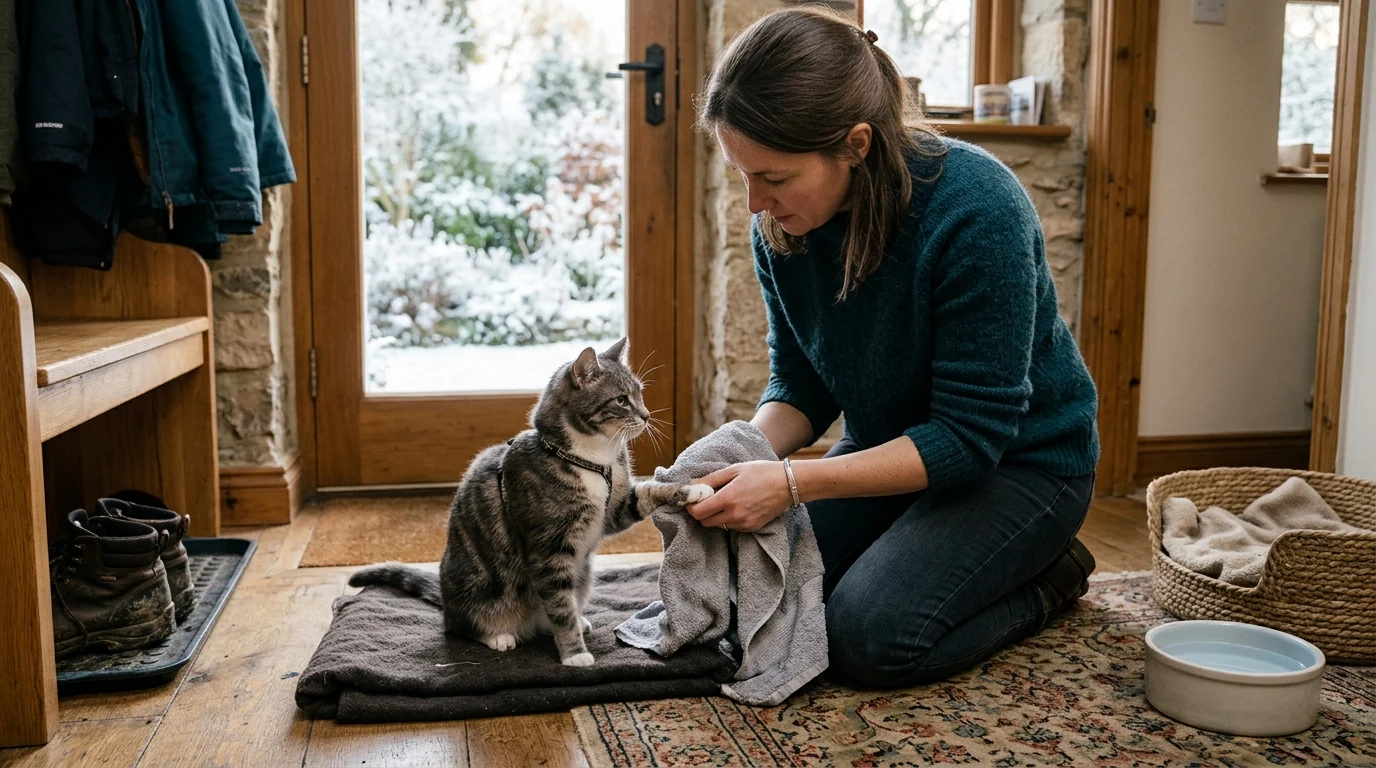
After your cat comes inside, look at their paws and coat. Gently wipe off moisture, ice, salt, or de-icing residue, including anything caught between the toes. This also helps remove material your cat might otherwise lick while grooming. Keep antifreeze sealed and clean up spills promptly: it is dangerous to pets. Before starting a parked car, check around it for animals that may have sought shelter nearby.
For more seasonal safety guidance, see the American Veterinary Medical Association’s cold-weather animal safety advice and the ASPCA’s cold-weather safety tips.
Know when to call your veterinarian
Cold ears or paws alone do not tell you how your cat is doing. After cold exposure, shivering, unusual weakness, disorientation, or difficulty rousing your cat are reasons to act promptly. Move your cat to a warm, dry place and contact a veterinarian. Do not try to warm them rapidly with direct heat.
Ask for veterinary advice if you notice pale or discolored skin, painful paws, or signs you suspect could be frostbite. Avoid rubbing the affected areas. Kittens, senior cats, and cats with health conditions may need additional protection; your veterinarian can help you decide what is appropriate for your cat.
Keep the routine easy to follow
Try putting a short reminder by the door: check the weather, keep water available, wipe paws after outdoor time, and watch for behavior changes. Assigning those steps to a morning and evening check can make them easier to remember when the household is busy.
If you would like a dedicated companion to that routine, our Caring for Cats in Cold Weather: Essential Winter Care Guide, Tips & Checklists offers a winter-focused guide and checklists. A checklist can help keep daily tasks consistent, but it cannot replace veterinary advice when your cat seems unwell.
Winter planning may also involve the trips you take to care for your household. Our Fuel Facts vs. Fiction digital fuel guide is a separate resource for vehicle-fuel questions, not a cat-care guide. For your cat’s daily comfort, the most useful decision remains the simplest one: provide a safe indoor space and respond to changes you notice.
FAQ
Can my cat go outside when it is cold?
Cold tolerance varies, but bring your cat indoors during freezing or severe weather. Otherwise, limit their time outside and make sure they can return indoors.
Should I wipe my cat’s paws after a winter walk?
Yes. A gentle wipe can remove moisture, salt, and de-icing residue your cat might otherwise lick off while grooming.
What should I do if my cat seems too cold?
Move your cat to a warm, dry place. If they are shivering, weak, disoriented, or difficult to rouse, contact a veterinarian promptly and avoid direct heat.
Recommended for you












Leave a comment