What is a simple system example?
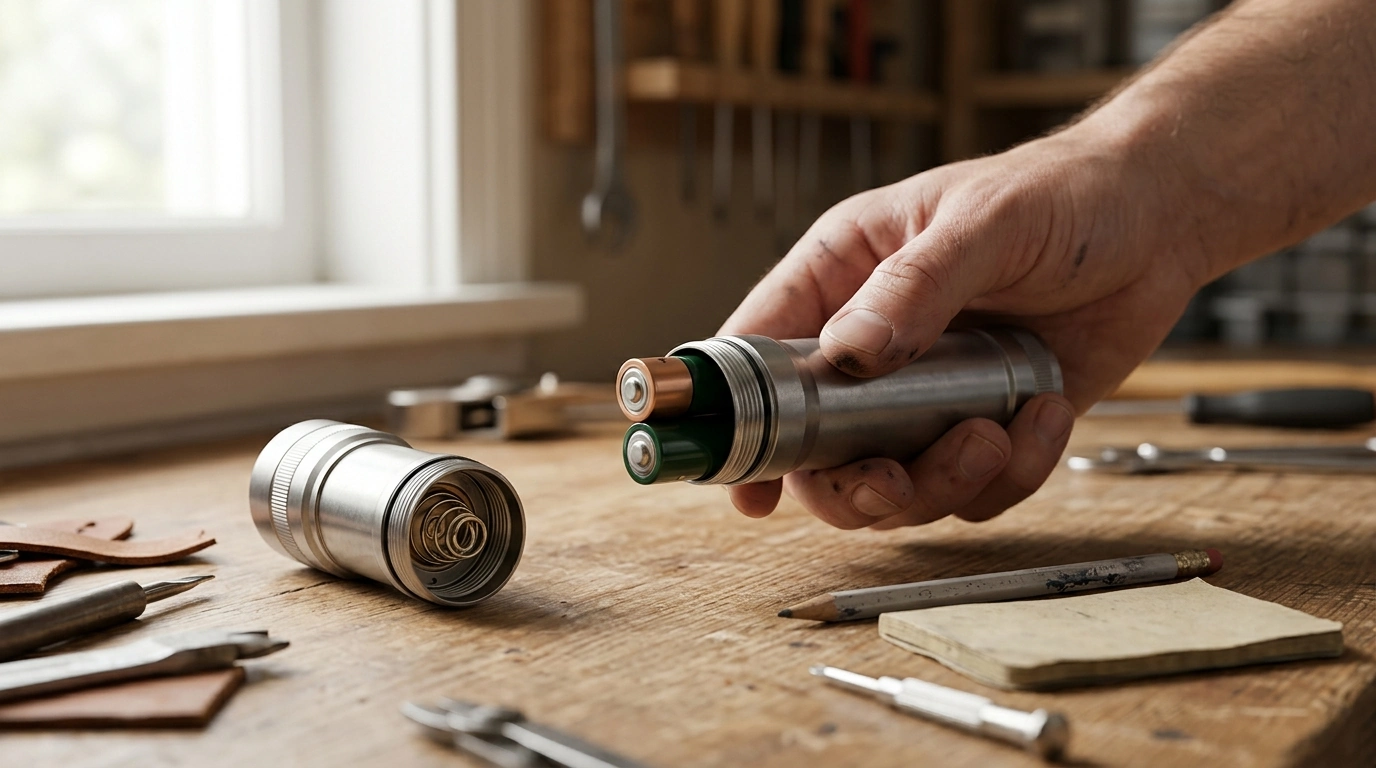
A flashlight is a simple system you can hold in your hand. Its parts work together to do one job: produce light when you need it. The batteries supply energy, the switch controls whether electricity can flow, and the bulb or LED turns that energy into light. If any essential part stops working, the flashlight may not light up.
How does a flashlight work as a system?
You can describe the flashlight using three steps: input, process, and output. The input is energy from the batteries. When you turn on the switch, electricity flows through the circuit; that flow is the process. The output is the light you use to see. Turning the switch off interrupts the circuit and stops the output.
This example shows why a system is more than a collection of parts. Batteries, a switch, and an LED sitting separately on a table will not light your way. They need to be connected and arranged so energy can move from one part to the next.
Why is this example useful?
The flashlight gives you a straightforward way to spot a problem. If it does not turn on, you can start with the input: are the batteries charged and installed in the correct direction? Then consider the process: is the switch working, and are the battery contacts clean? Finally, consider the output: has the bulb or LED failed? Thinking through the system in order is easier than guessing which part is at fault.
The same approach can help you choose a flashlight for your needs. Consider where you will use it, how you want to power it, and whether its controls will be easy for you to operate. Use only the battery type specified for the flashlight, and keep loose batteries away from small children. Our team favors questions like these because they connect the parts of a product to what you actually need it to do.
For a broader explanation of how parts work together, see our guide to simple system examples.
FAQ
Can a system work without electricity?
Yes. A manual can opener is a system: you supply the force, its handles and cutting wheel transfer that force, and the result is an opened can. A system needs interacting parts, but it does not need electricity.
Recommended for you












Leave a comment